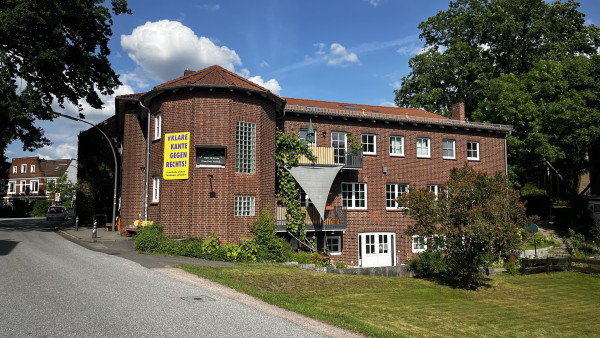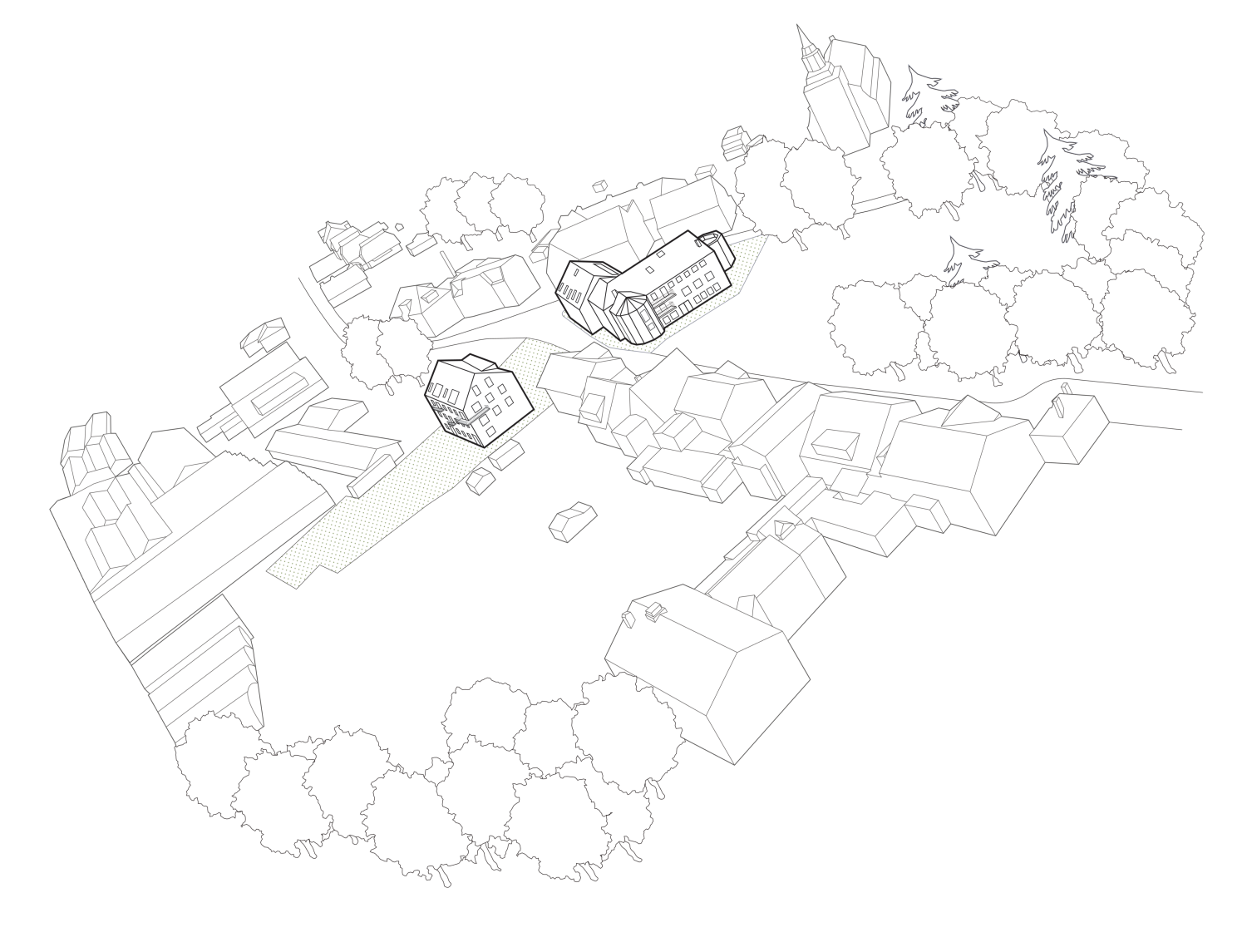
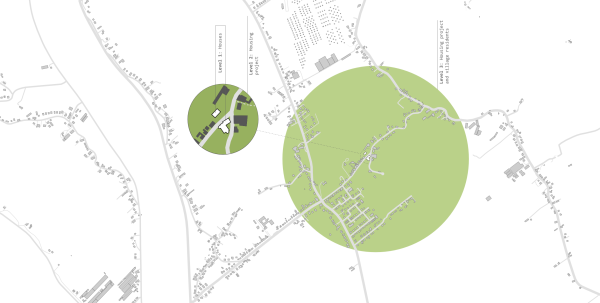
Location: The housing project "Stadt.Land.Fluss" is in a village just outside of Hamburg, close to the Doverelbe. With public transport, it takes 35 – 45 Minutes to Hamburg’s central station.
Usage: Housing and community
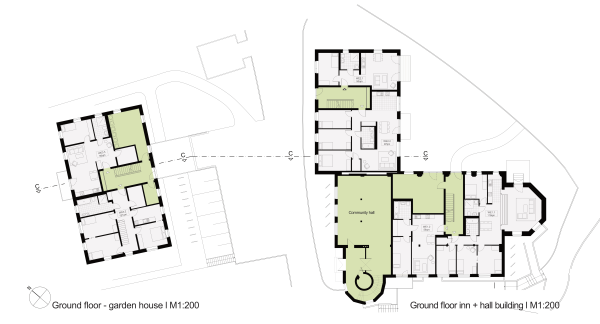
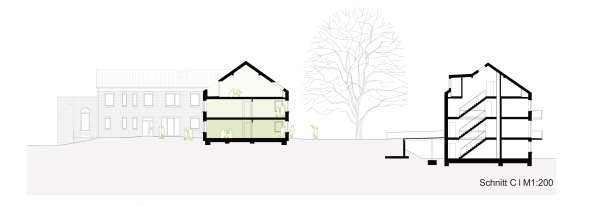
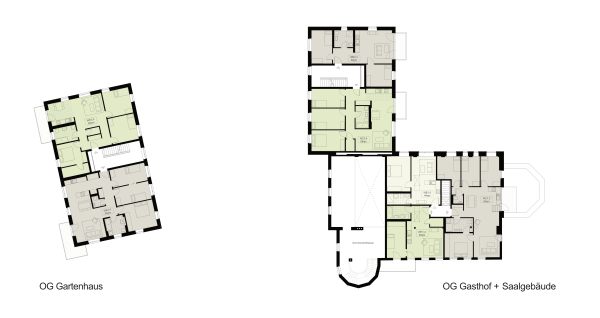
Housing types: Saal: 2 levels and a basement, Gasthof: 3 levels, Gartenhaus: 3 levels
Prior usage: Saal: Community hall for the village, Gasthof: Restaurant, Gartenhaus: parking lot
2010: First meetings of the group wanting to form a housing project
2012: Year community around housing project hands in offer for property
2014: the housing project enters into the cooperative “wohnreform eG”
2015: the property is officially bought
2015 - 2017: Construction time:
2017: Move in of first residents
Number of apartments: 19
Apartment size: 50m² – 120m²
Number of inhabitants: 30 adults, 20 children
Common areas: 300 m²
The Laundry Room Did Not Turn Out as Planned
The rattle of the washing machines blares as music in the background, the air is filled with chatter and laughter. What was once planned as the simple laundry room in the housing project has over time become a place to chat, meet up and spend time together. Especially during the winter months, when the 30 adults of the project see each other less because they don’t accidentally bump into each other in the yard, the laundry room has transformed from a room that cleans clothes to a room that clears souls – it enables the residents (at least the ones who do not have an own washing machine and thus rely on the laundry room) to reconnect, talk about their days and revive the community.
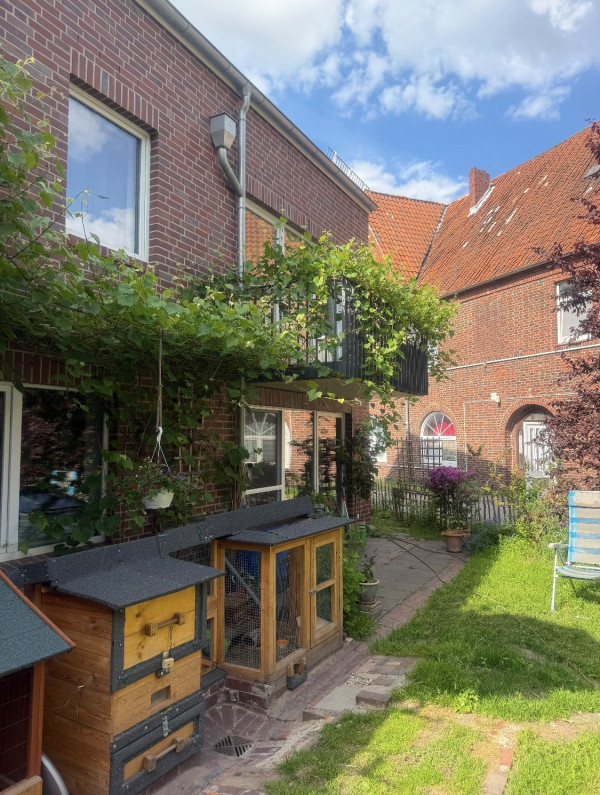
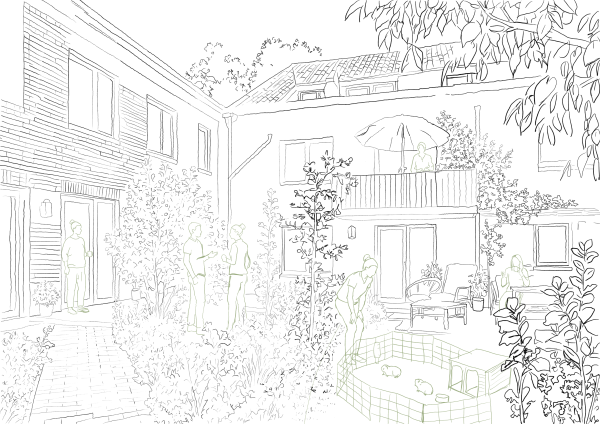
When the housing project met up once to twice a week in the years following their original offer on the property in 2012 – a time in which the number of future residents was still growing to match the square meters of the planned buildings – to make decisions about how they would live together, what spaces they wished for and how they would organize themselves, the laundry room was not on the list of common spaces. Neither was the small front yard, which leads to some of the apartments. Instead, there was a lot of talk about the large backyard, which was planned as a common space. About the wood workshop, the music room, the common hall, the sports room.
This goes to say, not all the spaces that serve the housing project and its residents as spaces of community were planned as such. And more so, not every common space is for the same community. In total, three different levels of community should be considered, all of which are anchored through common spaces, such as the laundry room.
With the materials on the right, we invite you to get to know the housing project by exploring the different levels of community and the common spaces that anchor them. We hope, you enjoy uncovering the different layers of community through the different texts, drawings and floor plans, just was we did while collecting these materials.
Hudcová/Nicolaysen/Aliabadi/Korn/HCU 2026 – Lizenz: CC BY-NC-SA
Co-Production and Care-Work - a Theoretical Deep-Dive
Spaces as More than Built Environment
What all these considerations of planned and unintentional common spaces and their different levels of community show, is, what Althaus and Glaser have already written in their attempt to understand the qualities of enduring buildings with the analytical approach of the housing biography: “When thinking about the qualities of a place, it…
Continue reading...The Seasons of Common Spaces
The three levels of community are not only anchored through the common spaces considered here, but these spaces are also subject to change.
As spaces, such as the yard or the sauna, are seasonally used and the laundry room is more frequented as a space to chat during the winter months, these common areas change with the seasons. Moreover, the levels of community are also faci…
Continue reading...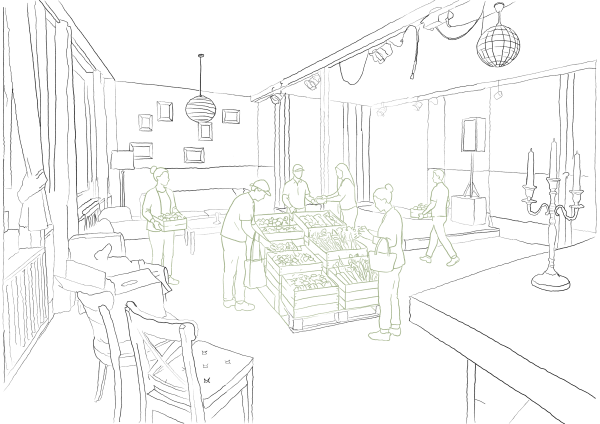
The Three Levels of Community
Level 1: Houses
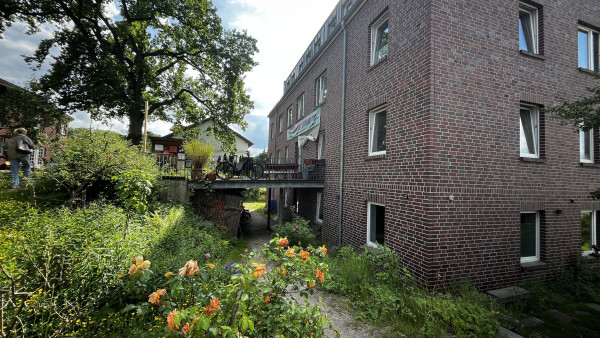
As the housing project is divided into three houses, two of them consisting mainly of apartments (Gartenhaus and Gasthof) and one with fewer apartments (Saal) right next to the Gasthof, the houses themselves have gained a level of community, from saying hello to the residents in the apartments next door to asking for flour upstairs.
For the apartment buildi…
Continue reading...The Common Hall: Community Across the Ages
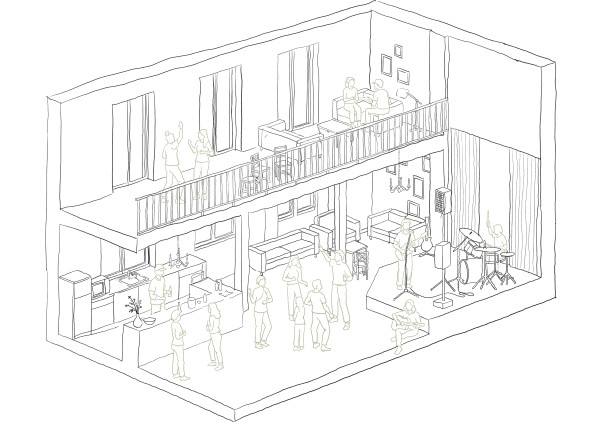
For decades, ”Rieges Gasthof” was a place, where the people of Ochsenwerder got together. At one point, the diner was such a significant part of the village, that it had its own postcard. And even after the diner stopped serving food, the building was still important to the inhabitants of the village. The building as a space for community outlived its function to serve food by …
Continue reading...