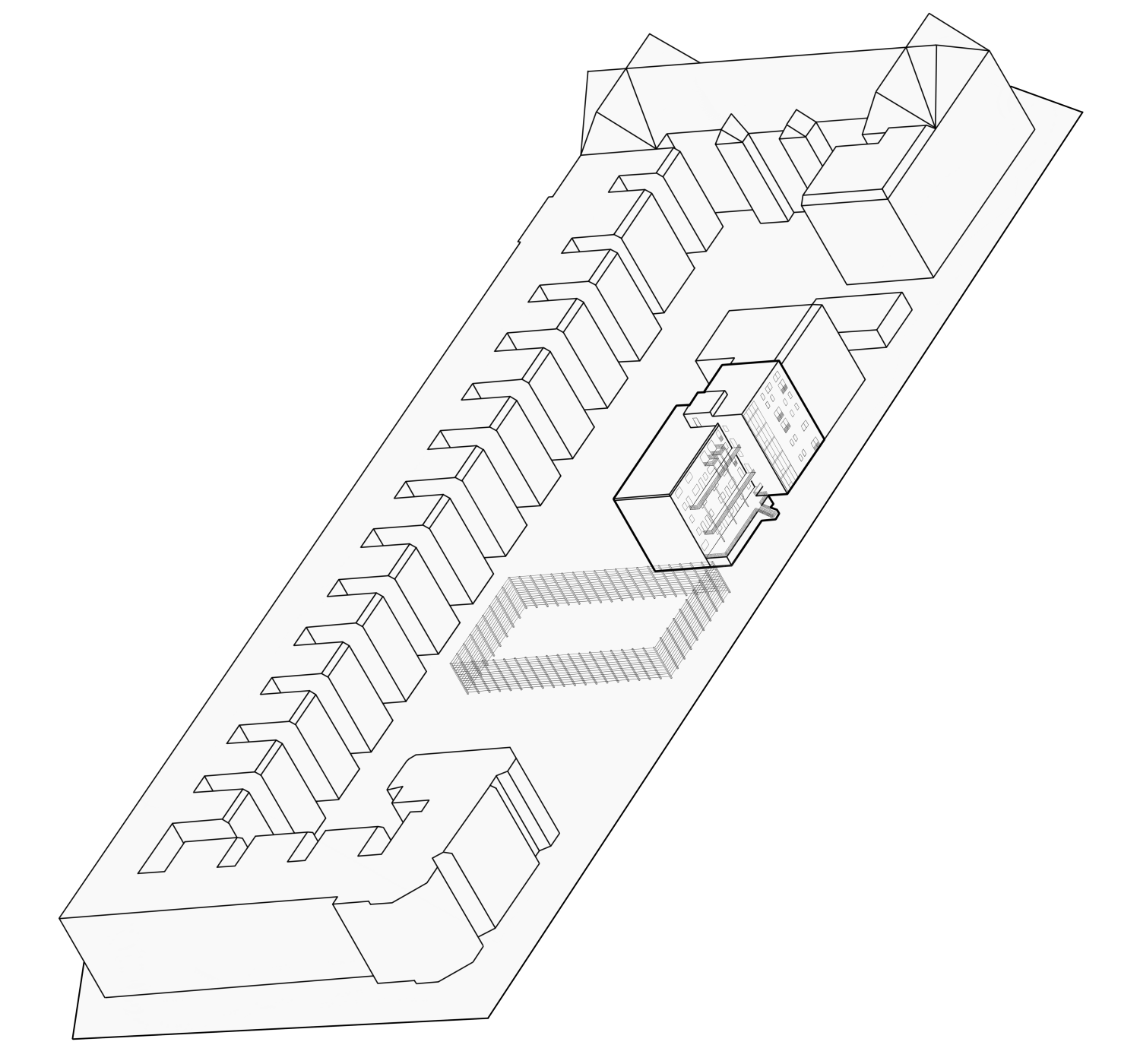
Owner: Wohnungsbaugenossenschaft Schanze e.G.
Use: Residential
Completed: 2003
Apartments: 18 residential units
Size: approx. 1,452 m²
Construction standard: Passive house
Source: Stattbau-Hamburg, Wohnprojekt 13, Interviews with Residents
Good Neighbours
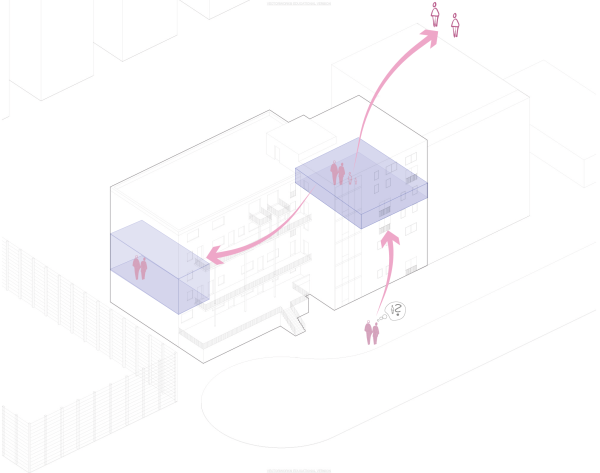
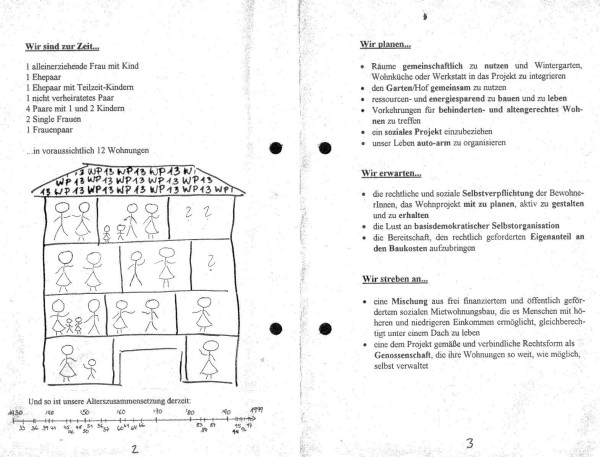
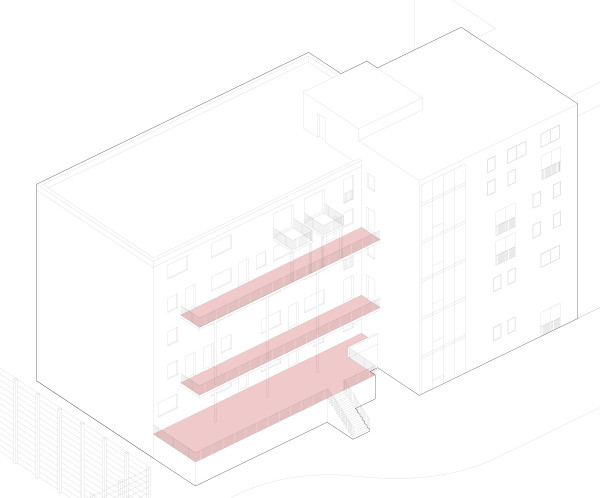
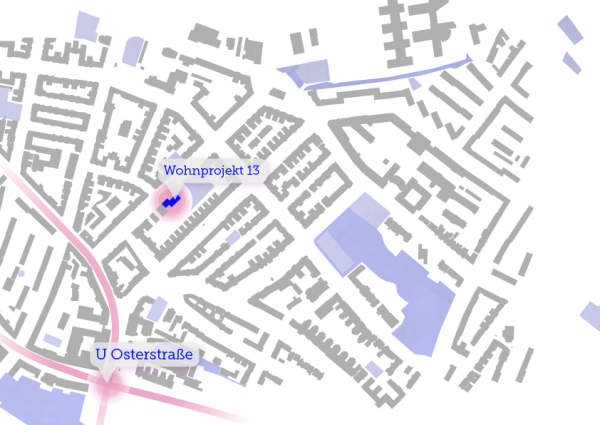
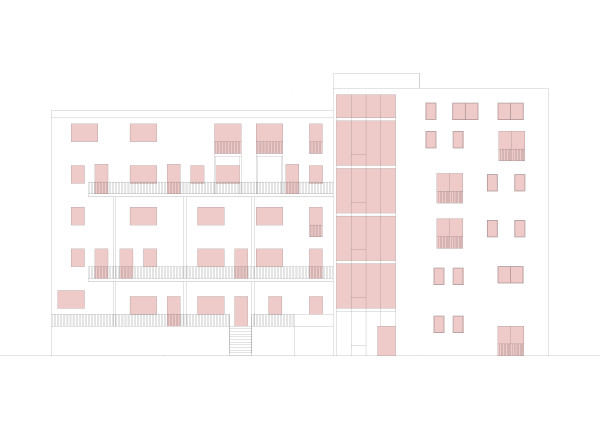
Wohnprojekt 13 is a cooperative housing project in Hamburg-Eimsbüttel where, since 2003, residents have been actively living and adapting the building to their needs. The primary goal of the project is to establish a stable, supportive social environment where people at entirely different stages of life can live together on a permanent basis. This vision is deeply integrated into the physical design of the building itself. The open corridors located directly in front of the apartments are intentionally designed to foster spontaneous daily encounters, while a central community room serves as a shared hub for both the residents and various local initiatives from the surrounding neighborhood. The overall spirit of this community is beautifully summarized by Resident R., a founding member, who explains: “We simply want to live together as good neighbours.”
A Real Home
What makes Wohnprojekt 13 feel like a true home is the unique combination of the physical building design and a self-governing structure that allows residents to actively shape their living spaces to fit their personal needs. The cooperative framework offers an immense sense of security, ensuring that once someone moves in, they do not have to worry about losing their living space. The organization also puts a great deal of effort into supporting residents when their life circumstances change. Instead of forcing people to relocate, the community facilitates apartment exchanges within the building to accommodate growing or shrinking family sizes, guaranteeing a reliable and deeply rooted sense of housing security for the future.
This has resulted in an intergenerational community, in which people at very different stages of life live together. Children grow up in the building, older residents remain part of the community as they age, and new ways of living are given space. People know one another, meet in the hallways, help carry groceries or water each other’s plants when someone is away. Community does not mean that everyone has to do everything together all the time. Rather it means knowing that someone is there when support is needed.
Community is Work
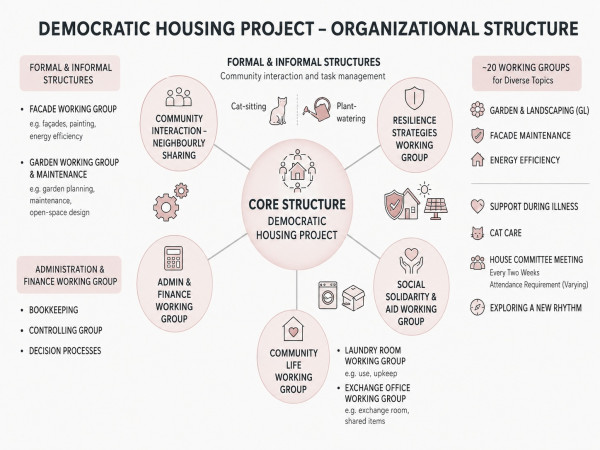
However, this rich sense of community does not happen on its own; it requires a continuous collective effort. Day-to-day self-organization demands a significant amount of coordination and open communication, which can occasionally feel overwhelming for the residents. The community is managed through a house plenary that meets every two weeks to make decisions, though attendance rates naturally fluctuate. These discussions cover the maintenance of the building, upcoming repairs, events and the future development of the housing project.
Additionally, there are approximately twenty specialized working groups handling tasks such as gardening, finance, and building maintenance, with every tenant encouraged to participate in at least one. Everyone can contribute according to their interests, knowledge and available time. Through this form of self-management, the building becomes a shared project that is continuously negotiated, shaped and developed. Ultimately, the many benefits of living in Wohnprojekt 13 are directly tied to this shared labor, meaning that while the lifestyle is incredibly rewarding, residents must also learn to balance their energy and sometimes step back to recharge.
Where People Meet
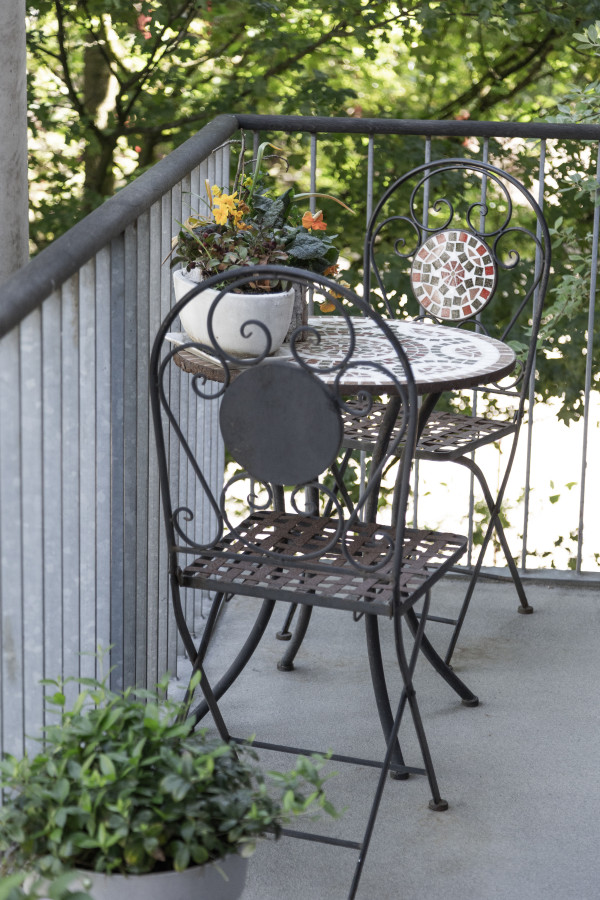
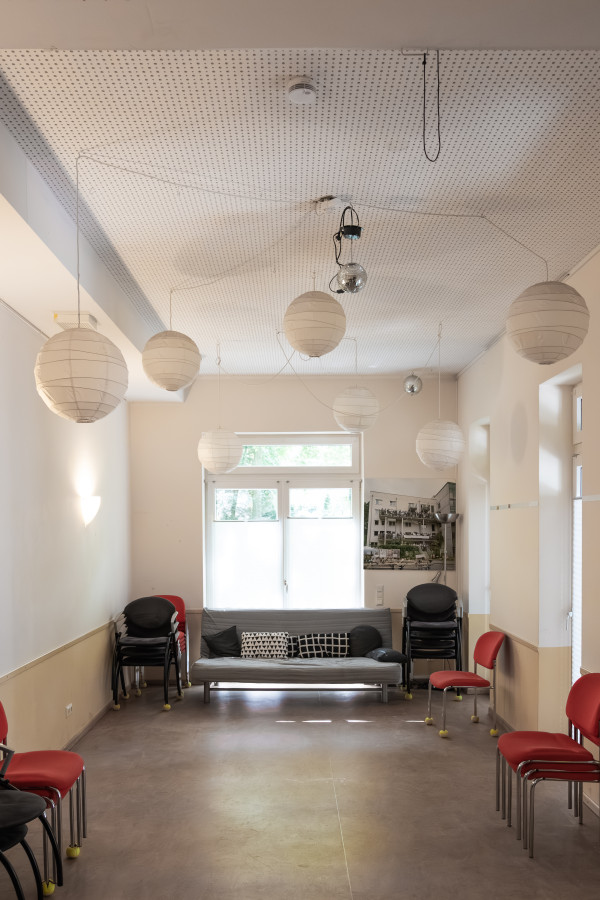
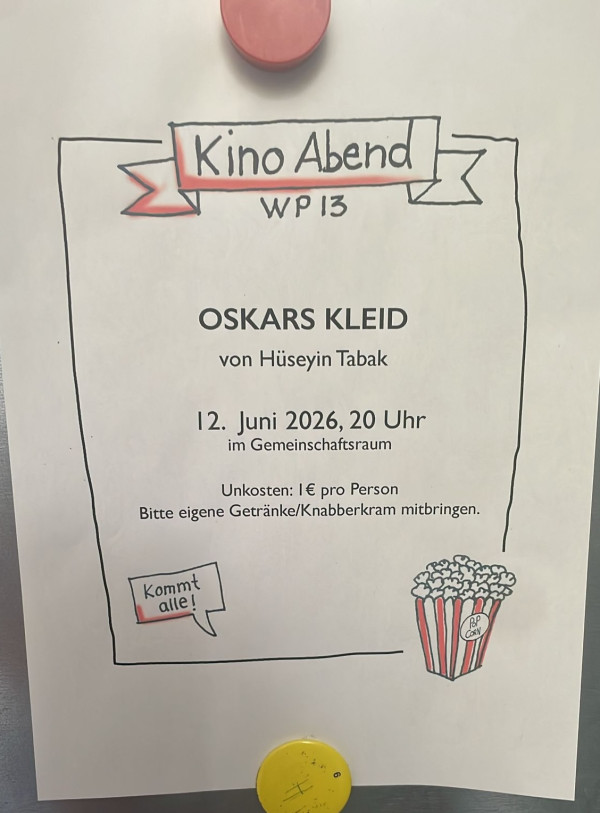
The shared spaces are essential to everyday community life within the housing project. The community room and the garden provide places for organised activities, celebrations, meetings and informal gatherings. At the same time, the corridors and external access galleries also function as important social spaces. They are more than circulation areas connecting the apartments: residents meet there, stop for conversations, sit outside their homes and take part in the daily life of the building. These different spaces create opportunities for both planned and spontaneous encounters. In this way, the architecture supports social interaction without requiring constant participation and helps turn the building from a collection of individual apartments into a connected living community.
Source: Interviews with Residents
Behrendt / Meinhardt / Nguyen / HCU 2026 – Licence: CC BY-NC-SA
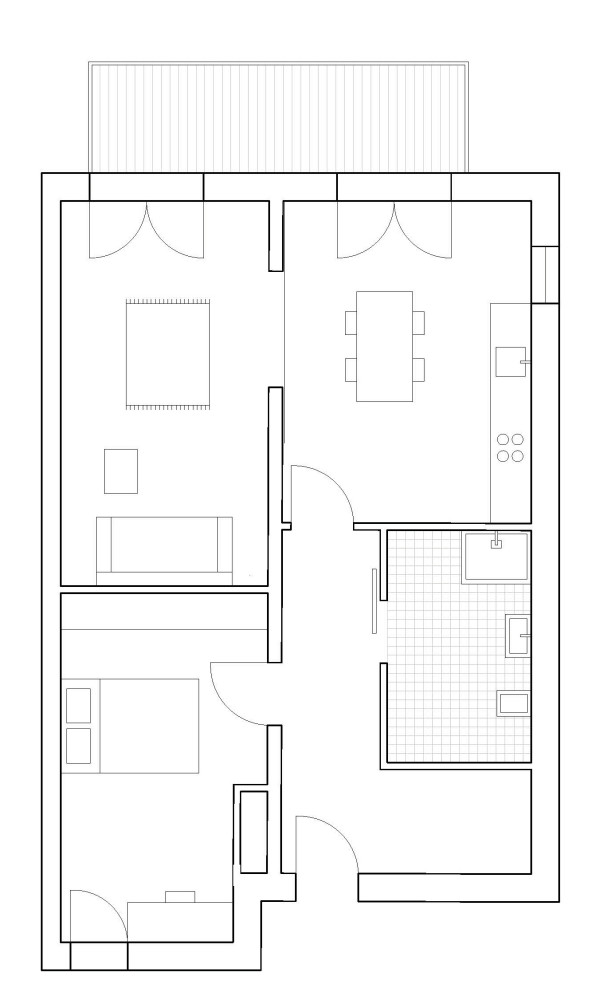
Resident B
The Young Couple
Moving into the Housing Project
Couple B moved into Wohnprojekt 13 in January 2025 following an intensive four-week selection process. A key reason for their decision was their desire for community-oriented living and a daily life more deeply rooted in neighborly interaction. For them, co-housing means getting to know the people in their own building, suppo…
Continue reading...
Resident A
The Long-Term Resident
Long-Term Commitment
Resident A belongs to the original core group of Wohnprojekt 13 and represents the strong residential continuity within the project. Their perspective is shaped by many years of experience, a close connection to the community and the intention to remain in the housing project permanently.
The resident’s housing biography demons…
Continue reading...